FindMyTBR

The Man Who Made Time Travel
At sea, captains need to know their ships' location at all times or risk crashing into unseen dangers. Since people first took to the seas, the stars have been useful for measuring latitude-or position relative to north and south.
About The Man Who Made Time Travel
At sea, captains need to know their ships' location at all times or risk crashing into unseen dangers. Since people first took to the seas, the stars have been useful for measuring latitude-or position relative to north and south. But up until the 18th century, there was no accurate way to measure longitude-or position relative to east and west. Countless seamen were lost because they didn't know they had sailed into dangerous waters. To encourage the invention of an accurate method for measuring longitude, the British monarchy offered the Longitude Prize in 1714. Major scientists of the age-notably Galileo and Sir Isaac Newton-were convinced the only possible solution was mapping the heavens. But John Harrison, a clockmaker from a tiny village, thought differently. He was sure the answer was simply a matter of time. Over many years, he built a seafaring clock entirely from scratch. His design worked brilliantly, yet politics conspired to keep him from the prize he so rightly deserved. This fascinating book from Kathryn Lasky will interest children in science, math, and history through an accessible biography of a great innovator.
Where to listen & where it's available
The Man Who Made Time Travel is available as an audiobook on Spotify and Apple Books. You can also check Audible and Amazon for other editions.
Buy or compare copies of The Man Who Made Time Travel
Retailer links open each store's page for this title. As an Amazon Associate, FindMyTBR may earn from qualifying purchases — see our affiliate disclosure.
More by Kathryn Lasky
 Watch Wolf (Wolves of the Beyond #3)
 To Be a King (The Guardians of Ga’Hoole Series)
 The Shattering (The Guardians of Ga’Hoole Series)
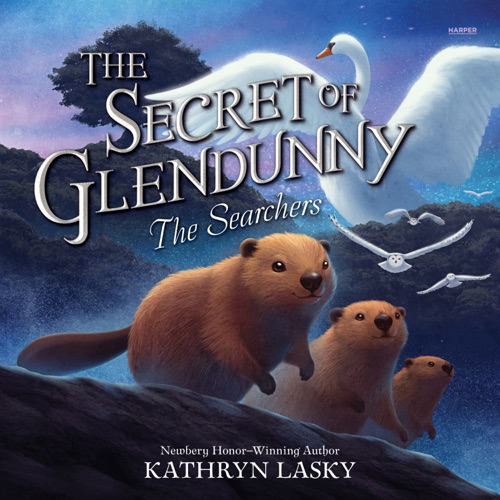 The Secret of Glendunny #2: The Searchers
 The Secret of Glendunny: The Haunting
 The Siege (The Guardians of Ga’Hoole Series)
 The Rescue (The Guardians of Ga’Hoole Series)
 The River of Wind (The Guardians of Ga’Hoole Series)
The Man Who Made Time Travel — frequently asked
- Is The Man Who Made Time Travel on Spotify?
- Yes — we've confirmed The Man Who Made Time Travel as an audiobook on Spotify. Open it from the links on this page.
- Is The Man Who Made Time Travel on Apple Books?
- Yes — The Man Who Made Time Travel is available as an audiobook on Apple Books.
- Who wrote The Man Who Made Time Travel?
- The Man Who Made Time Travel is by Kathryn Lasky.
- Where can I buy the The Man Who Made Time Travel audiobook?
- Audible and Amazon both carry audiobooks; use the retailer links on this page to go straight to The Man Who Made Time Travel. For print copies, compare Bookshop.org, Barnes & Noble, and Books-A-Million.
FindMyTBR aggregates audiobook availability across Spotify, Apple Books, Audible, and Amazon so you can
move your Goodreads TBR to audio. Availability reflects titles we've confirmed; a service with no badge
just hasn't been confirmed yet. Covers via Open Library.
Search your whole Goodreads shelf →