FindMyTBR

The Canon of Reason and Virtue: Lao-Tze’s Tao Teh King
This enigmatic scripture is attributed to the mysterious sage Lao Tze, who is believed to have lived in the sixth century BCE.
About The Canon of Reason and Virtue: Lao-Tze’s Tao Teh King
This enigmatic scripture is attributed to the mysterious sage Lao Tze, who is believed to have lived in the sixth century BCE. In the present translation by religious scholar Paul Carus, the title is presented as The Canon of Reason and Virtue, and in the body of the text Carus renders the word usually translated as “Tao” as “reason.” This book is an extract from the author’s larger work, Lao-Tze’s Tao Teh King. The latter contained an historical introduction, the Chinese text, a transliteration, explanatory notes and an index, including the Chinese terms. The present text is limited to that portion which would have been of universal interest to the English speaking world, the English translation. Carus noted that the term Tao (word, reason) corresponded quite closely with the Greek term Logos, which is featured in the Gospel of John. Carus also found correspondences with other Christian concepts such as the ethics of requiting hatred with goodness, the return to primitive simplicity and purity, and the power of non-resistance.
Where to listen & where it's available
The Canon of Reason and Virtue: Lao-Tze’s Tao Teh King is available as an audiobook on Apple Books. We haven't confirmed it on Spotify yet — but you can still search there below.
Buy or compare copies of The Canon of Reason and Virtue: Lao-Tze’s Tao Teh King
Retailer links open each store's page for this title. As an Amazon Associate, FindMyTBR may earn from qualifying purchases — see our affiliate disclosure.
More by Lao Tzu
 Tao Te Ching by Lao Tzu
 Tao Te Ching
 100 Quotes for Meditation with Lao Tzu
 500 Quotes of Lao Tsu for Meditation
 Tao Te Ching: Coterie Classics (Unabridged)
 The Tao Te Ching (Unabridged)
 Tao Te Ching: The Book of the Way and Its Virtue (Unabridged)
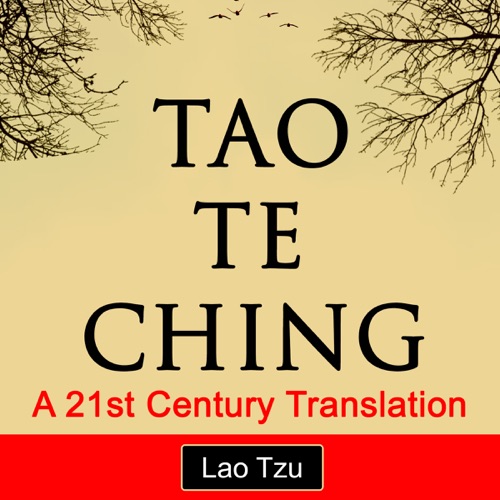 Tao Te Ching: A 21st Century Translation (Unabridged)
The Canon of Reason and Virtue: Lao-Tze’s Tao Teh King — frequently asked
- Is The Canon of Reason and Virtue: Lao-Tze’s Tao Teh King on Spotify?
- We haven't confirmed The Canon of Reason and Virtue: Lao-Tze’s Tao Teh King on Spotify's audiobook catalog yet. Spotify audiobooks are included with Premium (up to a monthly listening limit) in supported markets.
- Is The Canon of Reason and Virtue: Lao-Tze’s Tao Teh King on Apple Books?
- Yes — The Canon of Reason and Virtue: Lao-Tze’s Tao Teh King is available as an audiobook on Apple Books.
- Who wrote The Canon of Reason and Virtue: Lao-Tze’s Tao Teh King?
- The Canon of Reason and Virtue: Lao-Tze’s Tao Teh King is by Lao Tzu.
- Where can I buy the The Canon of Reason and Virtue: Lao-Tze’s Tao Teh King audiobook?
- Audible and Amazon both carry audiobooks; use the retailer links on this page to go straight to The Canon of Reason and Virtue: Lao-Tze’s Tao Teh King. For print copies, compare Bookshop.org, Barnes & Noble, and Books-A-Million.
FindMyTBR aggregates audiobook availability across Spotify, Apple Books, Audible, and Amazon so you can
move your Goodreads TBR to audio. Availability reflects titles we've confirmed; a service with no badge
just hasn't been confirmed yet. Covers via Open Library.
Search your whole Goodreads shelf →