FindMyTBR
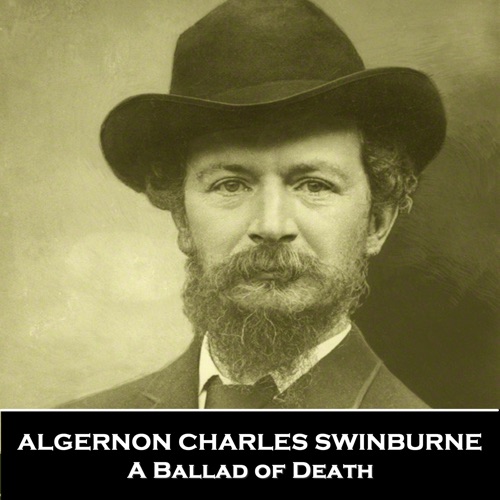
A Ballad of Death: A poetic examination of grief and lost love
Algernon Charles Swinburne was born on April 5th, 1837, in London, into a wealthy Northumbrian family. He was educated at Eton and at Balliol College, Oxford, but did not complete a degree.
About A Ballad of Death: A poetic examination of grief and lost love
Algernon Charles Swinburne was born on April 5th, 1837, in London, into a wealthy Northumbrian family. He was educated at Eton and at Balliol College, Oxford, but did not complete a degree. In 1860 Swinburne published two verse dramas but achieved his first literary success in 1865 with Atalanta in Calydon, written in the form of classical Greek tragedy. The following year "Poems and Ballads" brought him instant notoriety. He was now identified with "indecent" themes and the precept of art for art's sake. Although he produced much after this success in general his popularity and critical reputation declined. The most important qualities of Swinburne's work are an intense lyricism, his intricately extended and evocative imagery, metrical virtuosity, rich use of assonance and alliteration, and bold, complex rhythms. Swinburne's physical appearance was small, frail, and plagued by several other oddities of physique and temperament. Throughout the 1860s and 1870s he drank excessively and was prone to accidents that often left him bruised, bloody, or unconscious. Until his forties he suffered intermittent physical collapses that necessitated removal to his parents' home while he recovered. Throughout his career Swinburne also published literary criticism of great worth. His deep knowledge of world literatures contributed to a critical style rich in quotation, allusion, and comparison. He is particularly noted for discerning studies of Elizabethan dramatists and of many English and French poets and novelists. As well he was a noted essayist and wrote two novels. In 1879, Swinburne's friend and literary agent, Theodore Watts-Dunton, intervened during a time when Swinburne was dangerously ill. Watts-Dunton isolated Swinburne at a suburban home in Putney and gradually weaned him from alcohol, former companions and many other habits as well. Much of his poetry in this period may be inferior but some individual poems are exceptional; "By the North Sea," "Evening on the Broads," "A Nympholept," "The Lake of Gaube," and "Neap-Tide." Swinburne lived another thirty years with Watts-Dunton. He denied Swinburne's friends access to him, controlled the poet's money, and restricted his activities. It is often quoted that 'he saved the man but killed the poet'. Swinburne died on April 10th, 1909 at the age of seventy-two.
Where to listen & where it's available
A Ballad of Death: A poetic examination of grief and lost love is available as an audiobook on Apple Books. We haven't confirmed it on Spotify yet — but you can still search there below.
Buy or compare copies of A Ballad of Death: A poetic examination of grief and lost love
Retailer links open each store's page for this title. As an Amazon Associate, FindMyTBR may earn from qualifying purchases — see our affiliate disclosure.
More by Algernon Charles Swinburne
 Astrophel and Other Poems (Unabridged)
 Songs Before Sunrise (Unabridged)
 The Poetry of Algeron Charles Swinburne: Trailblazing writer whose worked often touched on taboo topics of Victorian times
 A Century Of Roundels (Unabridged)
 A Dark Month (Unabridged)
 A Match (Unabridged)
 Poems and Ballads & Atalanta in Calydon
 The Works of Algernon Charles Swinburne
You may also like


 Born in England – Exploring English Poetry - London: A celebration of English poems
Geoffrey Chaucer, William Blake, John Keats, John Donne, Lord Byron, Edmund Spenser, Ben Jonson, John Milton, Christina Rossetti, Alexander Pope, Edward Lear, Robert Browning, Thomas Hood, Daniel Defoe, Charlotte Mew, G. K. Chesterton, Thomas Gray, Charlotte Smith, Edward Thomas, William Morris, John Ruskin, Dante Gabriel Rossetti, Elizabeth Siddal & Algernon Charles Swinburne
Born in England – Exploring English Poetry - London: A celebration of English poems
Geoffrey Chaucer, William Blake, John Keats, John Donne, Lord Byron, Edmund Spenser, Ben Jonson, John Milton, Christina Rossetti, Alexander Pope, Edward Lear, Robert Browning, Thomas Hood, Daniel Defoe, Charlotte Mew, G. K. Chesterton, Thomas Gray, Charlotte Smith, Edward Thomas, William Morris, John Ruskin, Dante Gabriel Rossetti, Elizabeth Siddal & Algernon Charles Swinburne
 Born in England – Exploring English Poetry - Oxford University: A celebration of English poems
Percy Bysshe Shelley, John Donne, Matthew Arnold, Gerard Manley Hopkins, A. E. Houseman, Robert Southey, Sir Philip Sidney, Algernon Charles Swinburne, Robert Seymour Bridges, Michael Drayton, Lewis Carroll, William Morris, Edward Thomas & Laurence Binyon
Born in England – Exploring English Poetry - Oxford University: A celebration of English poems
Percy Bysshe Shelley, John Donne, Matthew Arnold, Gerard Manley Hopkins, A. E. Houseman, Robert Southey, Sir Philip Sidney, Algernon Charles Swinburne, Robert Seymour Bridges, Michael Drayton, Lewis Carroll, William Morris, Edward Thomas & Laurence Binyon
 Bitter Lips, Sweet Heart: A Poetry Collection (Unabridged)
Adriel Brandt, Lord Byron, Algernon Swinburne, William Shakespeare, William Blake, Robert Browning, Alfred Tennyson, Andrew Marvell, Dante Rossetti & Thomas Hardy
Bitter Lips, Sweet Heart: A Poetry Collection (Unabridged)
Adriel Brandt, Lord Byron, Algernon Swinburne, William Shakespeare, William Blake, Robert Browning, Alfred Tennyson, Andrew Marvell, Dante Rossetti & Thomas Hardy


A Ballad of Death: A poetic examination of grief and lost love — frequently asked
- Is A Ballad of Death: A poetic examination of grief and lost love on Spotify?
- We haven't confirmed A Ballad of Death: A poetic examination of grief and lost love on Spotify's audiobook catalog yet. Spotify audiobooks are included with Premium (up to a monthly listening limit) in supported markets.
- Is A Ballad of Death: A poetic examination of grief and lost love on Apple Books?
- Yes — A Ballad of Death: A poetic examination of grief and lost love is available as an audiobook on Apple Books.
- Who wrote A Ballad of Death: A poetic examination of grief and lost love?
- A Ballad of Death: A poetic examination of grief and lost love is by Algernon Charles Swinburne.
- Where can I buy the A Ballad of Death: A poetic examination of grief and lost love audiobook?
- Audible and Amazon both carry audiobooks; use the retailer links on this page to go straight to A Ballad of Death: A poetic examination of grief and lost love. For print copies, compare Bookshop.org, Barnes & Noble, and Books-A-Million.
FindMyTBR aggregates audiobook availability across Spotify, Apple Books, Audible, and Amazon so you can
move your Goodreads TBR to audio. Availability reflects titles we've confirmed; a service with no badge
just hasn't been confirmed yet. Covers via Open Library.
Search your whole Goodreads shelf →